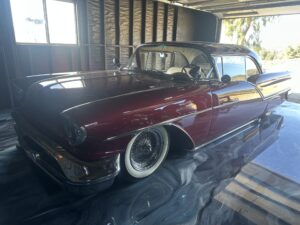
This 1957 Oldsmobile Super 88 VIN Verification was done by our team member in Anza, Ca. on 12-11-2025

This 1957 Oldsmobile Super 88 VIN Verification was done by our team member in Anza, Ca. on 12-11-2025
The 1957 Oldsmobile Super 88 represents the height of 1950s American automotive confidence, blending powerful V8 performance with bold styling and upscale comfort. Positioned between mainstream family cars and luxury sedans, the Super 88 was designed for buyers who wanted speed, presence, and refinement in one distinctive package.
The Oldsmobile 88 lineage dates back to 1949, widely regarded as one of the first true American muscle cars due to its lightweight body and powerful V8 engine. By 1957, the Super 88 had evolved into a premium performance model within Oldsmobile’s lineup, sitting above the base 88 and below the luxurious Ninety-Eight. The 1957 model year was especially significant, as it coincided with Detroit’s dramatic shift toward larger bodies, more chrome, and advanced engineering.
The 1957 Oldsmobile Super 88 was powered by a robust 371 cubic-inch (6.1-liter) Rocket V8 engine. Output varied depending on configuration, with horsepower ratings reaching up to 300 horsepower when equipped with a four-barrel carburetor and higher compression.
Transmission options included:
A 3-speed manual transmission
A Jetaway Hydra-Matic automatic, which was the most popular choice
This powertrain allowed the Super 88 to deliver strong acceleration and smooth highway cruising, reinforcing Oldsmobile’s reputation for performance-oriented engineering.
Styling was one of the Super 88’s strongest selling points. The 1957 model featured a long, low profile with sweeping chrome trim, quad headlights, and pronounced rear fins—hallmarks of late-1950s American design. Inside, the cabin emphasized comfort and style with wide bench seats, bright metal accents, and an aircraft-inspired dashboard layout.
Standard and available features included:
Power steering and power brakes
Power windows and seats
AM radio and heater
Deluxe upholstery and interior trim options
The Super 88 was available in several body styles, allowing buyers to tailor the car to their preferences. These included:
2-door hardtop
4-door sedan
4-door hardtop
Convertible
Station wagon (Fiesta series)
Each variant shared the same mechanical foundation but differed in exterior detailing and interior appointments.
Safety features in 1957 were minimal by modern standards, but the Super 88 incorporated advanced technology for its time. Innovations included:
A padded dashboard
Improved braking systems
Optional seat belts
Enhanced suspension tuning for better ride stability
Oldsmobile focused heavily on ride quality and driver confidence, which were key selling points during this era.
Fuel efficiency was not a primary concern in the 1950s, and the Super 88 reflected that mindset. The large-displacement V8 typically delivered approximately 12–15 miles per gallon, depending on driving conditions and transmission choice. Despite modest efficiency, the car’s smooth power delivery and highway comfort made it well-suited for long-distance travel.
In 1957, the Oldsmobile Super 88 competed directly with vehicles such as the Buick Century, Pontiac Star Chief, and Chrysler Windsor. Compared to these rivals, the Super 88 stood out for its balance of performance and luxury, offering more power than many competitors while remaining more accessible than full luxury models.
When new, the 1957 Oldsmobile Super 88 carried a base price ranging from approximately $2,700 to $3,200, depending on body style and options. Today, values vary widely based on condition, originality, and rarity, with well-restored examples often commanding significantly higher prices in the collector market.
While formal awards were less common in the 1950s, the Oldsmobile Super 88 earned widespread recognition for its performance credentials. Oldsmobile engines dominated early NASCAR competition during the decade, cementing the brand’s reputation for speed and durability. The Super 88, in particular, is frequently cited by historians as one of the defining performance cars of the era.